PALESTINIAN & LEVANTINE RECIPES • ENGLISH / العربية
← All recipes
mezze / main
Warak Enab
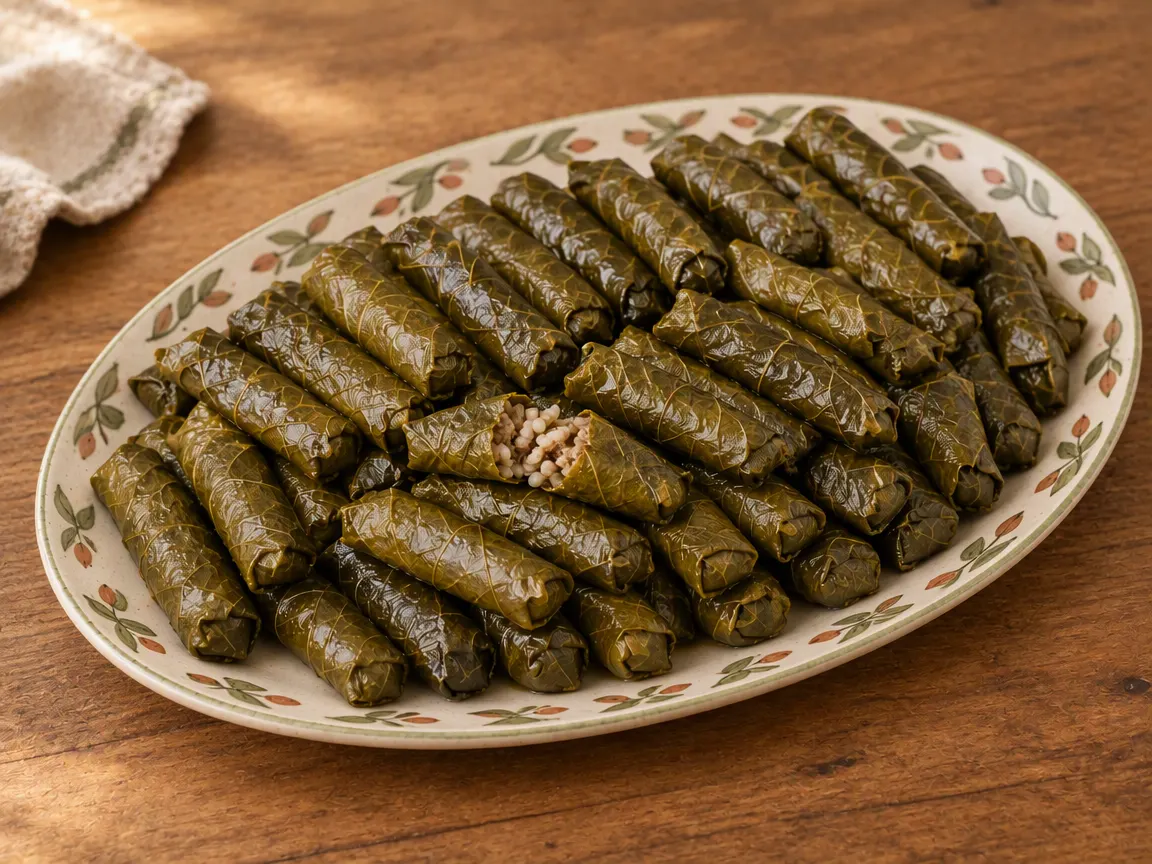
Grape leaves rolled thin around rice and, in this version, minced lamb, stacked tightly in a pot and simmered until the leaves turn tender. A dish measured by household in how thin the rolls are.
Prep 75 min · Cook 60 min · Total 135 min · Difficulty: hard
Servings
6
Ingredients
For the leaves
1
jar preserved grape leaves (about 400g), or fresh young leaves — rinsed well if from a jar, to remove excess brine
For the filling
1 1/2 cups
short grain rice — rinsed, not soaked
300 g
minced lamb or beef
3 tbsp
olive oil
1 tsp
salt
1/2 tsp
ground black pepper
1/2 tsp
ground allspice
1/4 tsp
ground cinnamon
For the pot
4
garlic cloves, whole
2
lamb bones or a few bone-in pieces — optional, for the base and for flavour, may be omitted
3 tbsp
lemon juice
2 cups
water or stock, enough to just cover
Method
1
If using jarred leaves, blanch them in boiling water for 2 minutes to soften and remove brine, then drain. Fresh leaves need the same brief blanch to make them pliable.
2
Mix the rice, meat, olive oil and spices together in a bowl. Do not cook the filling first — it finishes cooking inside the rolled leaf, which is what keeps it moist.
3
Lay a leaf shiny side down, vein side up, and trim the tough stem if there is one. Place a small line of filling near the stem edge, fold the sides in, and roll tightly away from you into a thin cigar shape — thinner rolls cook more evenly and are the mark of a practised hand, so do not worry if the first few are thick.
4
Line the base of a wide pot with the bones or a few torn leaves, to stop the rolls from catching. Arrange the garlic cloves among them, then pack the rolls tightly in rows, seam side down, layer upon layer — packing them tightly is what keeps them from unrolling as they cook.
5
Place an inverted small plate on top of the rolls to weigh them down, then pour in the lemon juice and enough water or stock to just cover the plate. Bring to a boil, then reduce to a low simmer, cover the pot, and cook for 45 to 60 minutes, until the rice is tender and the leaves have turned a soft olive colour.
6
Rest for 10 minutes before removing the plate. Invert a serving tray over the pot and turn it out, the way maqluba is flipped, so the neat layered rolls face up.
Notes
A meatless version, filled with rice, tomato, parsley and lemon only, is common during periods of fasting and is cooked the same way, usually for a shorter time since there is no meat to cook through.
This is a dish people genuinely compare across households by the thinness of the roll — it is worth the practice.
sufra daima
Palestinian & Levantine cooking, in English and Arabic.
Sufratkum ‘amira · May your table be full — what you say when the food goes down.